
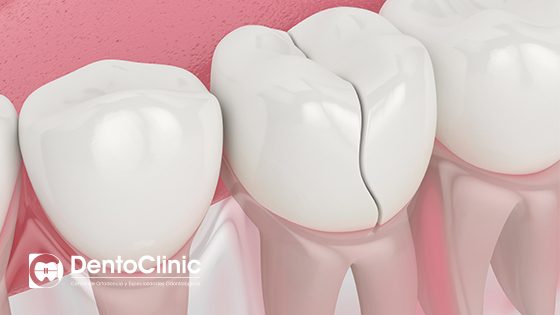
Tooth cracks are fissures that make their way across the exterior of the tooth. Cracks that occur only in the tooth enamel look like a crack and usually do not cause any symptoms. Age is an important factor, as most tooth cracks occur in people over 50 years old.
These dental cracks can be caused by:
BruxismThe habit of teeth grinding wears down the tooth's surface, making it more vulnerable to chips. The pressure produced during clenching can also spontaneously cause a tooth chip.
Chewing:In healthy teeth, cracks can occur from activities like chewing ice, candy, and hard foods.
Trauma or blows: A blow to the mouth, whether from an accident, sports injury, or fall, can also cause a tooth to crack or fracture.
Types of dental cracks or fractures
Superficial cracks. Fissures that only affect the enamel do not cause pain and do not pose any real problem, so they do not require treatment, although to prevent the possible penetration of bacteria from the oral cavity, it is recommended to seal them.
Deep fissures that extend beyond the outer layer of the tooth and into the dentin can cause intense pain. If the tooth's nerve is affected as a result of the crack, root canal treatment will be necessary to save the tooth.
Symptoms of cracked teeth
Not all cracks or fractures in teeth have symptoms. However, experiencing any of the following symptoms could be a sign that there is a crack in your tooth:
- Pain that comes and goes.
- Pain when biting or chewing.
- Sensitivity to sweet, hot, or cold.
- Swollen gums around a painful tooth.
- A broken tooth hurts because the pressure of chewing causes the crack to open.
When chewing stops, the pressure is released and the crack closes quickly, causing another sharp pain. Although the cracks are almost microscopic in size, when they open, they expose the sensitive pulp inside the tooth.
Cracks or fractures are often difficult to detect because the fissure is so small that it is invisible to the naked eye. If the tooth, its root, and its nerve are severely damaged, sometimes the only option is to extract it.
It's important to remember that ignoring pain in your mouth or teeth is not a treatment plan. The pain caused by a fractured tooth is a signal to seek help by scheduling an appointment with your dentist.


