
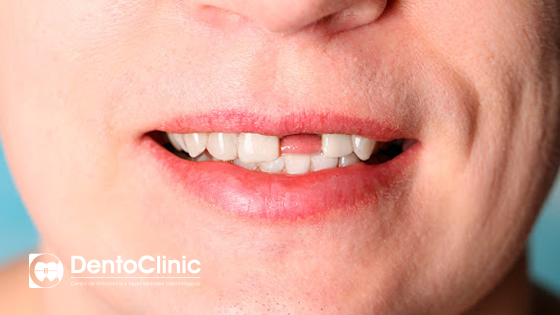
damage that may be caused by:
- Very large cavities that cannot be treated because they have destroyed too much of the tooth.
- A large infection that destroys the tooth and/or alveolar bone.
- When the infection reaches the nerve and for some reason a root canal is not possible.
- In cases of vertical fractures or those that have extended below the gum line.
- As indicated by orthodontic treatment to make space, allowing for proper tooth alignment.
- When the tooth has very pronounced mobility due to advanced periodontitis.
- It may also be indicated preventatively, as is the case with impacted teeth or wisdom teeth.
Questions about problems after an extraction
How long does inflammation take to go away?
After extraction, the treated area may swell. This is a very common symptom after the procedure and should not be a cause for concern, as it will gradually decrease over the following days.
Are you still having bleeding from time to time?
If after an hour of biting down on the gauze, you are still bleeding, place another piece of gauze on the wound and apply pressure. If you notice blood or saliva in your mouth, you can let it drip onto a napkin. Spitting dislodges the clot and causes you to bleed more.
Is there a piece of your molar left unextracted?
If a fractured root has been left behind and could not be extracted, you should go to your dentist or a surgeon to have the fractured root remnant extracted. However, in some cases, if the piece of root that remains is very small and its extraction involves possible complications or risks.
Are you taking your medication and the pain isn't going away?
In some cases, even though you take pain medication, it doesn't last long, and you have to take another dose after 4 hours. It's normal to have slight discomfort after a tooth extraction, which can be managed with the medication prescribed by the dentist.
Can't you open your mouth properly?
In some cases, especially in more complicated interventions or those that require you to keep your mouth open for a long time, they can cause trismus. This difficulty in opening your mouth is related to many factors, especially how the intervention was performed.
Inflammation caused by surgery also causes limitation of mouth opening.
Is your mouth still numb?
If after surgery you notice that your mouth remains numb and doesn't wake up for hours, contact your dentist as soon as possible. This may be due to the nerve being affected during the extraction. I recommend taking B1-B6-B12 vitamins and going to your dentist for an evaluation.
The importance of replacing an extracted tooth
It is very important, after extracting a tooth, to plan the rehabilitation of its space.
Dental implants
This will be the best rehabilitation treatment option for tooth loss or extraction, as broadly speaking, it is the treatment:
More durable, more comfortable, functional, and aesthetic.
Furthermore, it is the only treatment that allows for the preservation of alveolar bone, meaning it prevents bone reabsorption or loss.
Bridges or fixed prosthetics
This treatment will involve the preparation or grinding of the teeth adjacent to the extraction site, which could shorten the lifespan of these teeth. Fixed prostheses offer aesthetics and comfort, but their durability is inferior to that of dental implants.
Propdental Source


